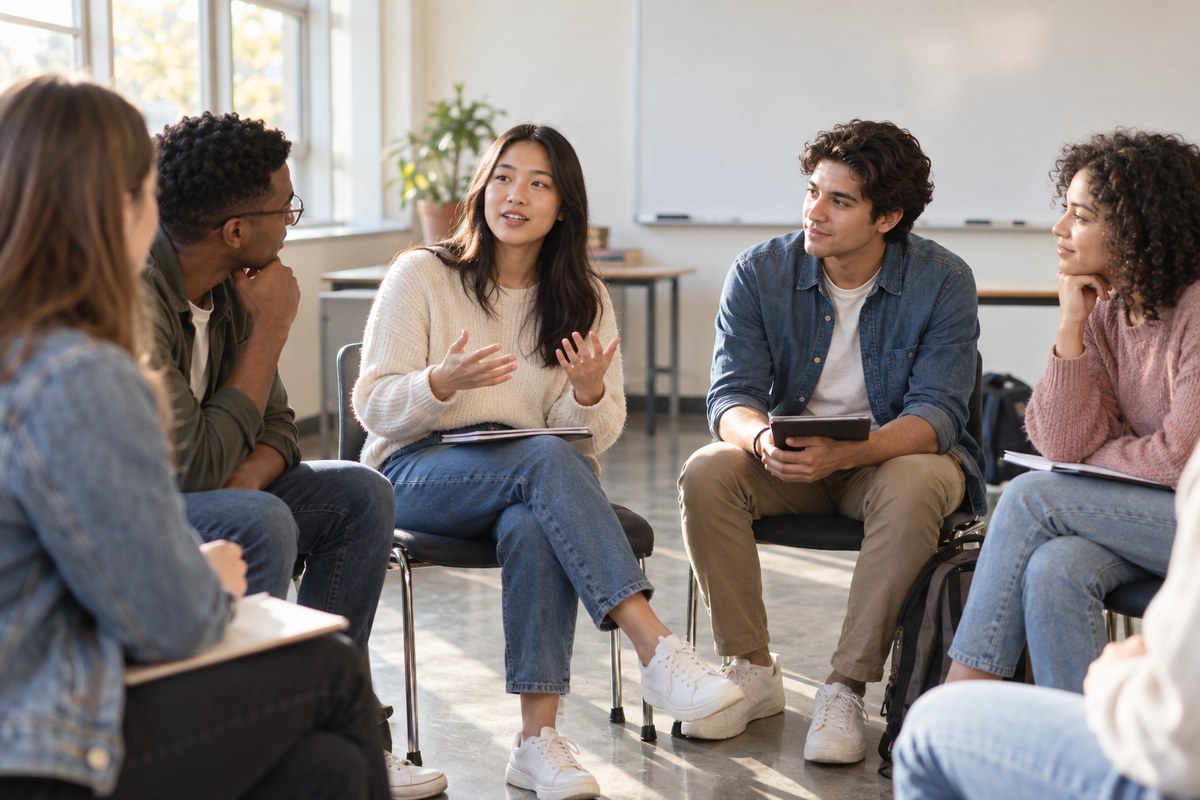
Student group discussions work better when the prompt asks the group to compare, decide, or design something. Give everyone a moment to write before speaking, then rotate the roles of connector, questioner, and summarizer. The topics below suit different subjects and ages.
Contents
- School and learning prompts
- Community and design prompts
- Questions for media literacy
- Learning and classroom life
- Technology and media
- Environment and design
- Community and belonging
- Health, food, and daily routines
- Fairness and decisions
- Stories, books, and history
- Science and problem solving
- Future plans and work
- Creativity and imagination
- Use three rotating roles
- Keep participation visible
School and learning prompts
- What makes feedback useful rather than discouraging?
- Which skill should every student learn before leaving school?
- When does group work help learning, and when does it get in the way?
- How should a class decide which questions deserve more time?
- What is a fair way to share credit on a team project?
- Should a school teach more local history?
Community and design prompts
- How could we make a public space easier for newcomers to use?
- What would a less wasteful school event look like?
- How should a community choose between two good projects?
- What information should a town put on a bus stop?
- How can a school welcome a student arriving midyear?
- What would make a library more useful after school?
Questions for media literacy
- How can a photo tell a true story and still mislead?
- What makes a source trustworthy for this specific claim?
- When should someone correct a claim they shared online?
- How can two headlines describe the same event differently?
Learning and classroom life
- What makes an explanation easy to remember?
- When should a class work in pairs instead of groups?
- How can a school help students who join late in the year?
- What should a class do when instructions are unclear?
- How could feedback be easier to use?
- Which school rule needs the clearest explanation?
- What makes a group project feel fair?
- How should students choose a topic for shared research?
- When is a demonstration better than a written explanation?
- How could students prepare better questions for a guest speaker?
- What should happen when a class finishes work early?
- How can a school make library time more useful?
- Which skills are hardest to learn from a textbook?
- What makes a study group worth attending?
- How should students record decisions in a group project?
- What would improve the first week of a new course?
- How can classmates share expertise without doing one another's work?
- When should a teacher stop a discussion and clarify facts?
- What makes a project rubric easy to understand?
- How could a classroom make quiet thinking more visible?
Technology and media
- How can a short video leave out important context?
- What clues help you check the origin of a picture?
- When is an online review useful evidence?
- How could an app explain its data use to teenagers?
- What makes a headline accurate but misleading?
- How should a class handle AI-generated suggestions?
- What should you check before sharing a statistic?
- How can a screenshot be genuine yet deceptive?
- When does a notification help, and when does it interrupt?
- How should a school choose digital learning tools?
- What makes a tutorial video trustworthy?
- How could students create a fairer class poll?
- What should an app do when it gives a wrong answer?
- How can two search results answer different questions?
- What information is missing from a viral chart?
- When should students ask permission before recording?
- How could a school website be easier to navigate?
- What makes an online source suitable for a science project?
- How should students label edited photographs?
- How can a group keep shared files organized?
Environment and design
- How could the school reduce waste at one event?
- Which area of the school needs more shade?
- What would make a local park better for different ages?
- How could a cafeteria make leftovers more useful?
- What should a school garden grow first?
- How can a class measure an environmental change?
- Which item in school is most worth repairing?
- How could students improve a recycling sign?
- What should a town consider before planting new trees?
- How can a school save water without inconveniencing pupils?
- What would make walking to school safer?
- What could make a neglected walking route feel safer?
- Where could a school add a quiet outdoor space?
- How can a public event avoid disposable decorations?
- What would an accessible nature trail include?
- How could a class compare two packaging choices?
- What might make people use a refill station?
- How can students investigate heat around the school?
- What should happen to broken equipment that can be fixed?
- How could a town protect wildlife while adding paths?
Community and belonging
- What helps a newcomer join a group conversation?
- How should a school welcome families with different languages?
- What makes a public place comfortable for teenagers?
- How could a community center attract first-time visitors?
- What should a school ask before planning a cultural event?
- How can students make a club accessible to beginners?
- What would help neighbors share useful resources?
- How could a library help someone new to town?
- What makes a local event feel inclusive?
- How should a group respond when someone's idea is overlooked?
- What could students learn from an older resident's story?
- How can a school involve students who dislike public speaking?
- Where do young people need more places to gather?
- How could a town explain its plans more clearly?
- What makes a volunteer role easy to start?
- How can students thank people whose work is rarely seen?
- What should a youth council be able to decide?
- How could a school make a first club meeting less awkward?
- What makes a good partner for a community project?
- How should a group make room for different opinions?
Health, food, and daily routines
- What makes a school lunch break feel restful?
- How could a classroom reduce unnecessary noise?
- When does a routine help learning?
- How should students evaluate health advice online?
- What would make a playground useful in all weather?
- How can a school support students during exam periods?
- What are the trade-offs of a later start time?
- How could a cafeteria make healthy choices easier to notice?
- What helps a group handle a stressful deadline?
- Which school spaces need better seating?
- How could students plan a low-cost shared meal?
- What makes a sports activity welcoming to beginners?
- How should a class decide whether a wellness trend is credible?
- What can students do when a friend needs adult support?
- How could a school make drinking water easier to access?
- What helps people focus after a long break?
- How should a group divide tasks when someone is unwell?
- What makes a classroom temperature comfortable for most people?
- How could students reduce food waste at lunch?
- What small change would make a busy day calmer?
Fairness and decisions
- When is taking turns fairer than voting?
- How should a group choose a leader for a short task?
- What should happen when someone misses a group deadline?
- How can a class decide which idea to test first?
- When should a rule have an exception?
- What makes a disagreement respectful?
- How could a group divide credit for a shared result?
- When should a decision be revisited?
- How can students tell if a vote was informed?
- What should a team do when an important voice is missing?
- How can a class compare two good proposals?
- When is a compromise worse than choosing one option?
- What evidence would change your view on a school policy?
- How should students respond to an unfair game rule?
- What is a fair way to allocate limited equipment?
- How can a group recognize invisible work?
- When should a team ask an adult to help settle a conflict?
- How can a class test whether a new rule works?
- What should a leader do after making a poor decision?
- How can students disagree with a popular idea?
Stories, books, and history
- How does a story change when another character tells it?
- What makes a historical account incomplete?
- Should a film adaptation keep the book's ending?
- How can an object tell the story of a place?
- What can a local monument leave unexplained?
- How do stories influence our view of a group?
- What makes a character's choice believable?
- How should a museum present disagreement about the past?
- What questions would you ask the author of a text?
- How can a story make a familiar place seem new?
- What does an old map reveal about a town?
- How should a class compare two accounts of the same event?
- What makes a book worth recommending to someone else?
- How can a family story become a useful historical source?
- When does humor help explain a serious subject?
- What might be lost when a story is shortened?
- How can a class check a surprising historical claim?
- What makes an ending satisfying without being happy?
- How should a group choose a text to study together?
- What can a photograph tell us, and what can it hide?
Science and problem solving
- What makes an experiment a fair test?
- How could a class measure noise around school?
- What should scientists do when results surprise them?
- How can a model be useful when it is incomplete?
- What makes a good question for a field study?
- How should a group explain uncertainty in its results?
- What could students learn from testing bridge designs?
- How can you compare two possible causes of a problem?
- When is a graph more useful than a table?
- What should happen after an experiment fails?
- How could students test a claim about memory?
- What evidence would show that a design is safer?
- How can a simple prototype reveal a hidden problem?
- What are the limits of a classroom survey?
- How should a team choose what to measure first?
- What makes an observation different from an interpretation?
- How can a class explain an unexpected outlier?
- When should an experiment be repeated?
- What would make a scientific poster easier to read?
- How can students share a result without overstating it?
Future plans and work
- What makes a career path difficult to predict?
- How can students learn what a job is really like?
- Should schools teach more practical money skills?
- What would make work experience more useful?
- How can a person choose between two good opportunities?
- What skills transfer between very different jobs?
- How should a group plan a project with an uncertain deadline?
- What makes a mentor helpful?
- How can students ask about pay without embarrassment?
- What should a first job teach besides technical work?
- How can volunteering build a useful skill?
- What makes a workplace welcoming to a beginner?
- How should students prepare for a changing field?
- What would you ask someone who changed careers?
- How can a team give feedback to a new member?
- What makes a goal realistic but challenging?
- When should someone stop working on a plan?
- How can students make a portfolio of their work?
- What do employers mean by communication skills?
- How can a student describe a failure honestly in an interview?
Creativity and imagination
- What problem should a school invention solve first?
- How could a bus stop be redesigned for rainy days?
- What would a library for night owls look like?
- How could a game teach people about a local place?
Use three rotating roles
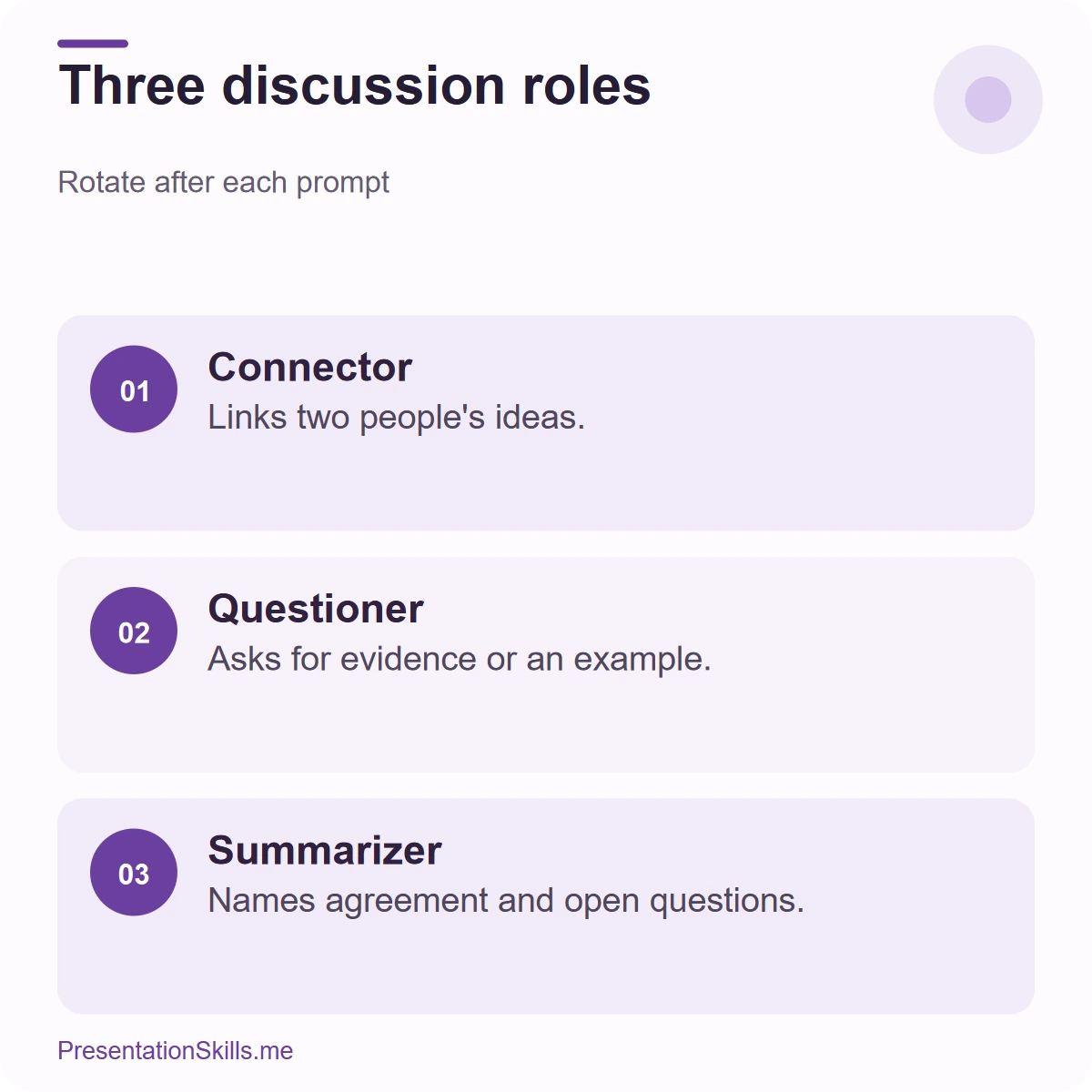
Connector: links two people’s ideas. Questioner: asks for an example or evidence. Summarizer: states what the group agrees on and what remains open. Rotate roles after each prompt.
Give everyone 30 seconds to jot down an idea before discussion. Start with pairs, then move to a group of four. End with an “exit sentence”: “I changed my view about ___ because ___” or “I still need to know ___.” That gives the activity an outcome beyond who spoke most. For a more formal argument, try our debate prompts.
Keep participation visible
A group can seem active even when two confident students do all the talking. Give each person one initial turn and invite responses after everyone has spoken. The summarizer should name an idea from each participant, not only the majority view. When someone is quiet, offer the choice to share a written note or question instead of putting them on the spot.
Use a clear outcome: a ranked list, a jointly written question, or a recommendation with one unresolved issue. The outcome gives students a reason to build on one another’s contributions rather than reciting prepared opinions.