
A three-minute speech can carry one idea, one example, and a clear ending. Choose a topic with a single moment or decision at its centre. The prompts below pair with a 30–120–30 timing plan you can use for rehearsal.
Contents
Personal experience prompts
- A small mistake that changed how I work
- The best question someone ever asked me
- A place that taught me to pay attention
- A skill I learned later than expected
- What a lost item taught me about habits
- One tradition I would like to keep
- A time I changed my mind after listening
- The most useful advice I ignored at first
Ideas to explain
- Why a good checklist is a kindness to your future self
- How a map can change a decision
- Why examples teach better than definitions
- What makes a question worth asking
- How to notice an assumption in a headline
- Why public spaces need places to sit
- When taking a break improves the work
- The hidden value of repairing something
Persuasive prompts
- Try one week of shorter meetings
- Borrow a book outside your usual genre
- Learn the name of one local tree
- Ask for feedback before a project is finished
- Put captions on every short video you share
- Keep a record of small wins
Personal moments worth telling
- The first time I had to ask for help
- A small mistake that changed my routine
- The kindest thing a stranger has done for me
- An object I almost threw away
- A time I changed my mind in public
- A conversation I wish I had recorded
- The day a plan failed in a useful way
- What I learned from a long wait
- A compliment I did not expect
- The most useful question someone asked me
- A place that sounds different at night
- The first task I completed on my own
- An ordinary day I remember clearly
- When I had to explain something to a child
- A tradition I helped change
- The best decision I made with little information
- The last time I was pleasantly surprised
- A time I had to start over
- An awkward introduction that became a friendship
- The lesson behind a family saying
Show how something works
- How to prepare for a difficult phone call
- How to give directions without a map
- How to start a shared reading habit
- How to check a claim before passing it on
- How to plan a meal with what is already at home
- How to organize a bag for a busy day
- How to make a new person feel included
- How to turn a vague goal into a first step
- How to decide which notification to silence
- How to rehearse a short introduction
- How to spot the most important line in a chart
- How to ask a better follow-up question
- How to plan a low-cost day out
- How to make a simple decision log
- How to prepare for a first volunteer shift
- How to learn a name and remember it
- How to explain a hobby to a beginner
- How to design a useful checklist
- How to end a meeting with clear next steps
- How to practice a skill for ten minutes
Ideas to persuade an audience
- Why every group should agree on a start time
- Why schools should teach basic repair skills
- Why a library card is worth using
- Why meetings need a clear purpose
- Why a walk can improve a stuck discussion
- Why every neighborhood needs a free indoor gathering place
- Why we should ask before giving advice
- Why a short break can improve practice
- Why students should help set classroom routines
- Why digital files need useful names
- Why teams should celebrate quiet contributions
- Why borrowing can be better than buying
- Why a project needs a stopping rule
- Why we should make instructions easier to find
- Why beginners need examples as well as rules
- Why community events should be accessible by bus
- Why an apology should include a next step
- Why we should keep some unscheduled time
- Why a good question is worth more than a quick answer
- Why we should test a plan on a small scale
Places and communities
- One thing visitors misunderstand about my town
- A public place I would redesign
- The best way to welcome a new neighbor
- A local skill worth passing on
- What a street sign can tell us about history
- A community event I would bring back
- The place where I do my best thinking
- Why a small shop matters to its neighborhood
- A local problem that needs a modest solution
- What makes a park comfortable for everyone
- The most useful service in my community
- How a shared space changes at different hours
- A place I know through its sounds
- One local story worth preserving
- How to help someone feel at home in a new city
- The best thing a visitor can do in one afternoon
- A neighborhood habit worth keeping
- What I would add to a community noticeboard
- How a local club helped someone learn
- A place that deserves a second look
Creative prompts with a clear point
- The day every calendar showed the wrong date
- If my shoes could review a journey
- A museum of everyday inventions
- The last letter from a retired traffic light
- An award ceremony for overlooked chores
- What a lost umbrella might say about its owner
- A guide to a city with no street names
- The interview with a very patient houseplant
- Three rules for a library on the moon
- The message inside a time capsule from next week
- A tour of the world's smallest festival
- The job interview for a new season
- A weather forecast for a nervous Monday
- The trial of an alarm clock
- A postcard sent by a park bench
- Instructions for befriending a robot neighbor
- The day all doors required a password
- A conversation between two forgotten bookmarks
The 30–120–30 plan
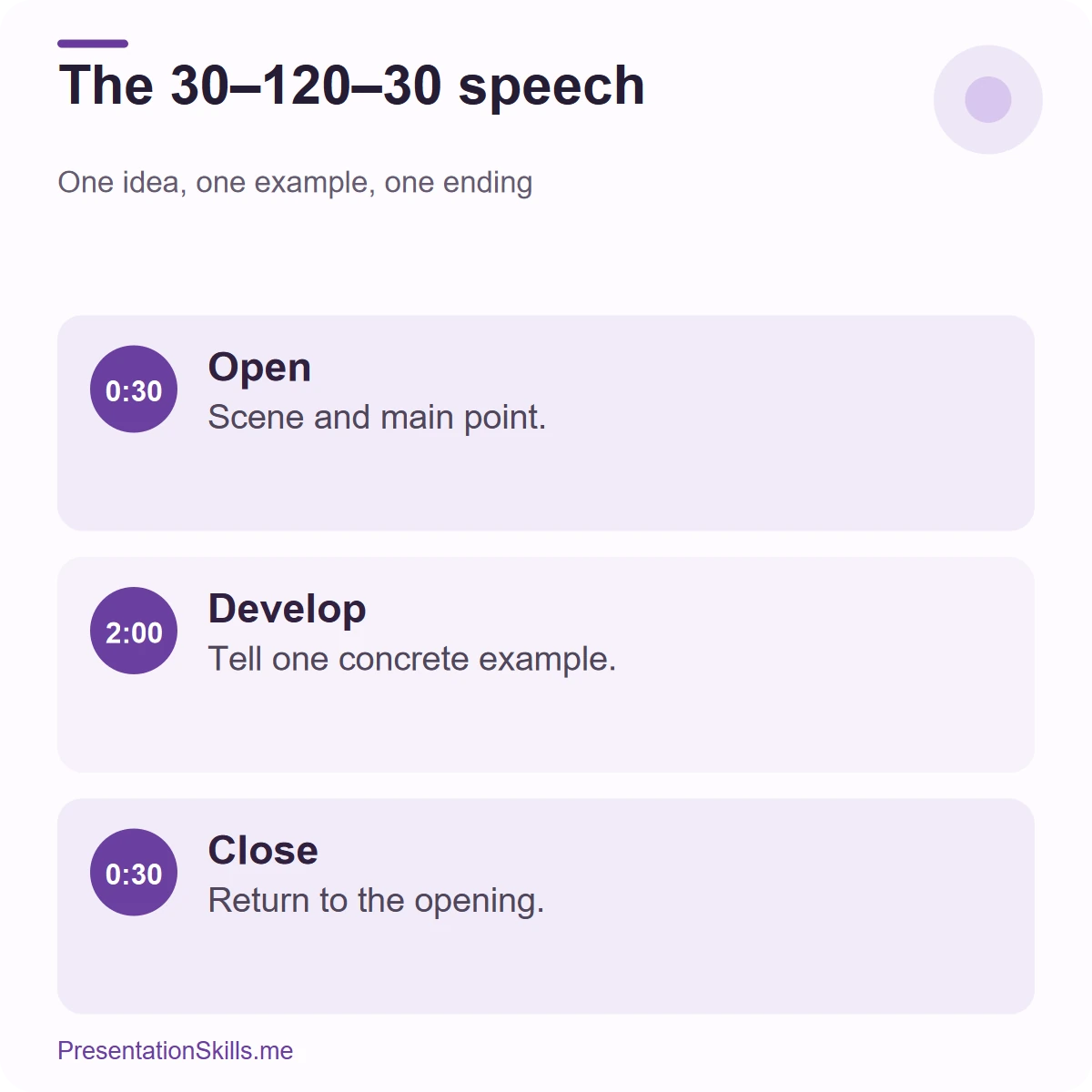
First 30 seconds: a scene or question and your main point. Next 120 seconds: one concrete story or example, then what it means. Last 30 seconds: a callback to the opening and one action or thought to take away.
Rehearse aloud three times. After the first run, remove any sentence that does not support the main point. After the second, check the timing. On the third, leave room for pauses and a natural breath. If you finish early, do not add a second topic; strengthen the example or ending. For a little more room, try our simple speech ideas with a five-minute format.
Cut to the moment that matters
If your first draft runs five minutes, do not speak faster. Find the scene, fact, or choice that best carries the point and remove the rest. A short talk is often stronger when it begins close to the turning point: “I was about to send the email when…” The audience can infer background from a few well-chosen details.
Mark one sentence you want listeners to remember. Say it plainly near the beginning and return to it at the end. In rehearsal, ask a friend what they remember an hour later; their answer is a better measure of clarity than your own word count.