
For a five-minute presentation, choose one question you can answer with a single example. Open with a familiar situation, make your point, demonstrate it, and end with one action. The topics below are narrow enough to fit that structure.
Contents
- Useful how-to topics
- Questions that invite a viewpoint
- Practical skills for everyday life
- Work and meetings
- Learning and study
- Technology in plain language
- Places and community
- Nature and sustainability
- Personal stories with a takeaway
- Questions worth debating briefly
- Visual demonstrations
- Creative and light topics
- Use a five-minute map
- Test whether a topic really fits
Useful how-to topics
- How to write a clearer meeting agenda
- How to spot a misleading chart axis
- How to make a digital file easier to find
- How to ask a better follow-up question
- How to prepare for a difficult phone call
- How to plan one week of meals with less waste
- How to explain a complex idea with an analogy
- How to give feedback that leads to action
Questions that invite a viewpoint
- Should every team have a meeting-free hour?
- What makes a public space welcoming?
- When is a checklist better than a reminder?
- What should a beginner learn first in your hobby?
- Which small change would improve a local service?
- What can a failed experiment teach a team?
- Is convenience always worth the hidden cost?
- Which habit helps you learn something new?
Practical skills for everyday life
- How to prepare a useful shopping list from one recipe
- How to pack a bag for a short trip without overpacking
- How to compare two phone plans fairly
- How to read a weather forecast before an outdoor event
- How to keep a bicycle visible and secure
- How to organize a shared household calendar
- How to write a polite follow-up message
- How to plan a low-cost day out
- How to choose a reusable bottle you will carry
- How to find a trustworthy local repair service
- How to make a simple emergency contact card
- How to ask for directions that you can remember
- How to prepare for a library visit with children
- How to sort a crowded photo folder
- How to remember names after meeting a new group
- How to divide household chores more fairly
- How to check the total cost of a subscription
- How to prepare one vegetable in three ways
- How to make a short personal budget review
- How to set up a calm morning routine
Work and meetings
- How to turn a vague request into a clear task
- How to end a meeting with a named owner
- How to write a one-sentence project update
- How to ask a colleague for a useful example
- How to make a handoff easier for the next person
- How to choose between chat and a meeting
- How to spot a decision hidden in a discussion
- How to write an agenda with a clear outcome
- How to introduce a new team member well
- How to summarize a disagreement fairly
- How to check whether a task is truly finished
- How to prepare one question for a mentor
- How to improve a confusing process instruction
- How to give a status update without reading every detail
- How to notice a dependency before it delays work
- How to respond when a meeting goes off track
- How to ask for feedback on a draft
- How to make a recurring report shorter
- How to decide what to stop doing this week
- How to record a decision so it is easy to find
Learning and study
- How to turn class notes into a short review card
- How to check a claim against two sources
- How to teach someone a new word in one example
- How to make a study plan you can change
- How to explain a chart without reading every value
- How to compare a primary and a secondary source
- How to test what you remember without rereading
- How to ask a better question in class
- How to learn a new keyboard shortcut
- How to build a useful glossary while reading
- How to work through a difficult paragraph
- How to study a map of an unfamiliar place
- How to turn a mistake into a practice question
- How to explain a process with a simple drawing
- How to prepare for a short oral exam
- How to choose a topic for a research project
- How to evaluate an educational video
- How to remember a sequence with a story
- How to make a group study session productive
- How to decide when to ask for help
Technology in plain language
- What a password manager does in daily use
- How an app notification reaches your phone
- Why a file name can save time later
- What happens when you scan a QR code
- How two-factor sign-in changes an account login
- How captions are added to a short video
- What cloud storage actually stores
- How a search engine chooses what to show
- How to tell a download from a web page
- What an image's alt text is for
- Why an old device may stop receiving updates
- How to check a link before opening it
- What a browser tab remembers
- How to share a document without sending copies
- How to reduce interruptions from your phone
- What a backup protects and what it cannot
- How to spot a misleading screenshot
- How to compare two versions of a document
- Why a video may play differently on another device
- How to write a useful bug report
Places and community
- One small change that would improve a bus stop
- How a public library can help someone new to town
- Why a park needs both activity and quiet space
- What makes a street easy to cross
- How a community garden shares work
- Why local noticeboards still matter
- How to make a school entrance more welcoming
- What an accessible event invitation should say
- How a repair cafe works
- Why some public signs are hard to read
- How to plan a neighborhood swap day
- What makes a town square useful after dark
- How a museum chooses a story to tell
- Why a small local business needs clear opening hours
- How to help a newcomer find a service
- What a good walking route includes
- How to make a community meeting less intimidating
- Why a shared tool library could save money
- How a local market supports producers
- What makes a public bench worth using
Nature and sustainability
- How to identify one tree near your home
- What happens to food waste after collection
- How to repair a torn piece of clothing
- Why shade matters in a hot playground
- How to reduce waste at one family meal
- What makes a garden friendly to pollinators
- How to refill a water bottle on a long trip
- Why a product's lifespan matters
- How to choose a plant for a small balcony
- What a rain garden is meant to do
- How to compare repair and replacement costs
- Why a local pond supports wildlife
- How to keep a reusable bag where you need it
- What a seasonal food calendar shows
- How to make an event less wasteful
- Why some insects belong in a garden
- How a compost bin changes food scraps
- How to use daylight in a workspace
- What a tree survey can reveal about a street
- Why packaging size can be misleading
Personal stories with a takeaway
- A small favor that made a large difference
- The question that changed how I learn
- A mistake that improved a routine
- A place that looked different on a second visit
- The first time I taught someone a skill
- A habit I stopped because it no longer helped
- The best use I found for an old object
- A conversation that changed a plan
- The tool I underestimated until I needed it
- A time I chose the slower route
- The most useful note I ever kept
- An ordinary object with a surprising history
- A tradition I adapted for a new group
- The moment I noticed a hidden assumption
- A project that became easier after feedback
- The most helpful instruction I received
- An unexpected lesson from a delay
- A time I changed my mind about a place
- The day a checklist saved me time
- A small decision I am glad I recorded
Questions worth debating briefly
- Should teams have a meeting-free morning?
- Should public libraries lend tools?
- Is a handwritten note more memorable than a message?
- Should a city prioritize trees over parking on one street?
- Should every presentation allow audience questions?
- Is learning from a mistake better than avoiding it?
- Should apps default to fewer notifications?
- Should school projects have more revision time?
- Is a quiet workspace more valuable than a larger one?
- Should local events publish their waste figures?
- Should a team document why it rejected an idea?
- Is a short deadline helpful for creativity?
- Should a neighborhood have a shared garden?
- Should people repair an item before buying a replacement?
- Is a paper checklist better than a phone reminder?
- Should workplaces offer more flexible start times?
- Should museums let visitors help choose exhibits?
- Should public signs use more pictures?
- Is a smaller audience better for difficult talks?
- Should every project begin with a question, not a plan?
Visual demonstrations
- Show how a misleading axis changes a chart
- Demonstrate a before-and-after email subject line
- Explain a workflow with three sticky notes
- Compare two versions of a meeting agenda
- Show how to label a photo for accessibility
- Demonstrate a simple breathing reset before speaking
- Turn a long paragraph into a useful diagram
- Show how a map changes a travel choice
- Compare a cluttered slide with a focused slide
- Demonstrate a short interview question sequence
- Show how to arrange a small desk for a task
- Explain an object by taking it apart safely
- Compare two ways to pack a fragile item
- Show how to annotate a short PDF
- Demonstrate a quick source-checking routine
- Explain a local route with a simple sketch
- Show how to make a checklist from a repeated mistake
- Compare a vague and a specific call to action
- Demonstrate how to pace a one-minute explanation
- Show how a three-step recipe can be remembered
Creative and light topics
- Design a better umbrella for windy days
- Pitch a museum for ordinary household objects
- Explain a new holiday for finishing small tasks
- Invent a club with one unusual membership rule
Use a five-minute map
0:00–0:30: Give the audience a situation they recognize. 0:30–1:00: State the one point. 1:00–3:30: Show one example or demonstration. 3:30–4:30: Address the main objection or mistake. 4:30–5:00: Give one action to try.
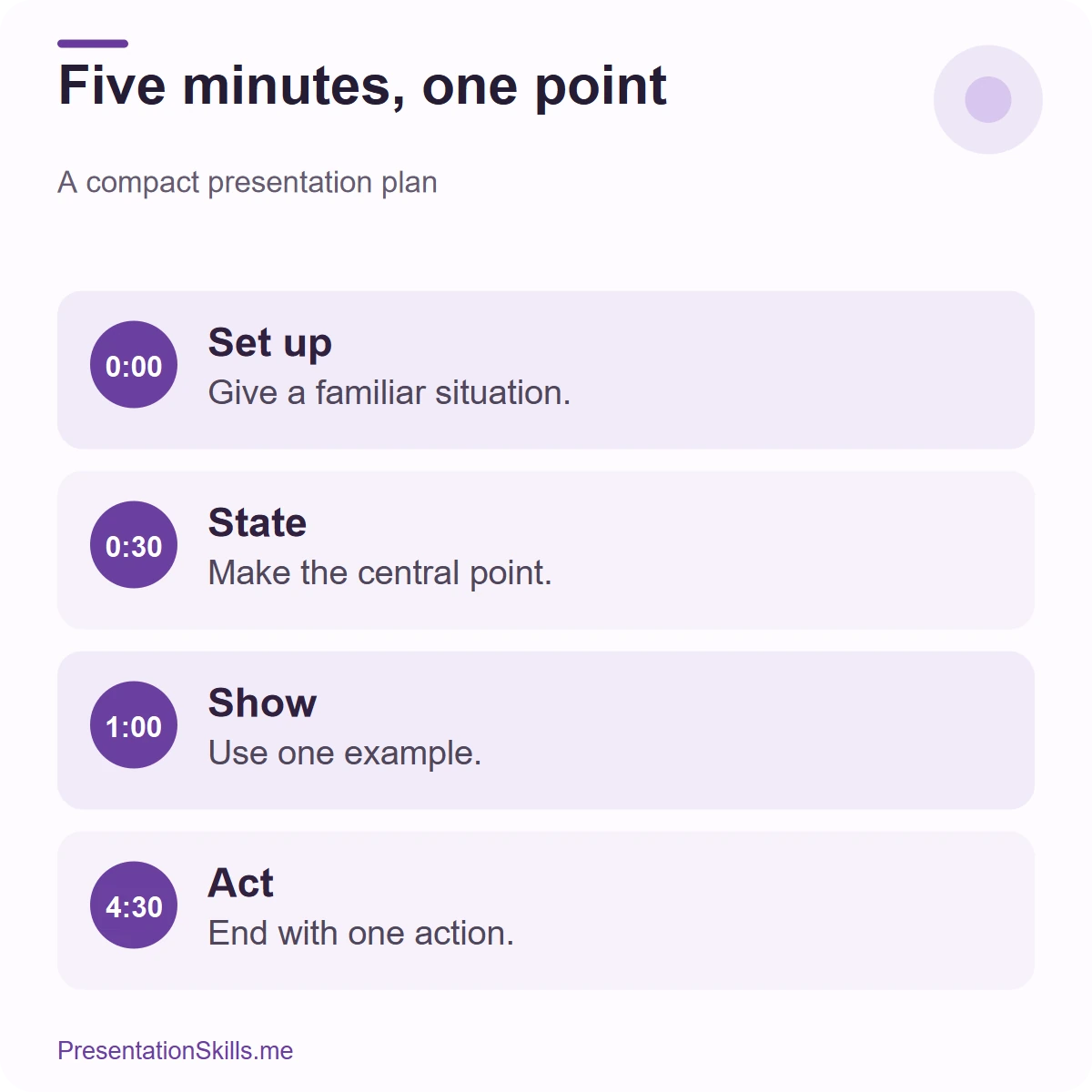
Rehearse with a timer and cut an idea if the example runs long. A talk that finishes at 4:40 with a memorable action is stronger than one that squeezes in a second conclusion. For a shorter challenge, see our simple speech topics and the three-minute format below.
Test whether a topic really fits
Write the talk’s answer in one sentence. If it contains “and” twice, you probably have several talks. A five-minute presentation on “how to give feedback” is broad; “one question to ask before giving feedback” is manageable. Choose a single example that shows the idea working, then decide what the audience should do with it.
Limit slides to the visuals that genuinely help. A live demonstration, one image, or a before-and-after example can be more memorable than five bullet slides. Leave the last few seconds for a full stop rather than ending mid-sentence when the timer sounds.