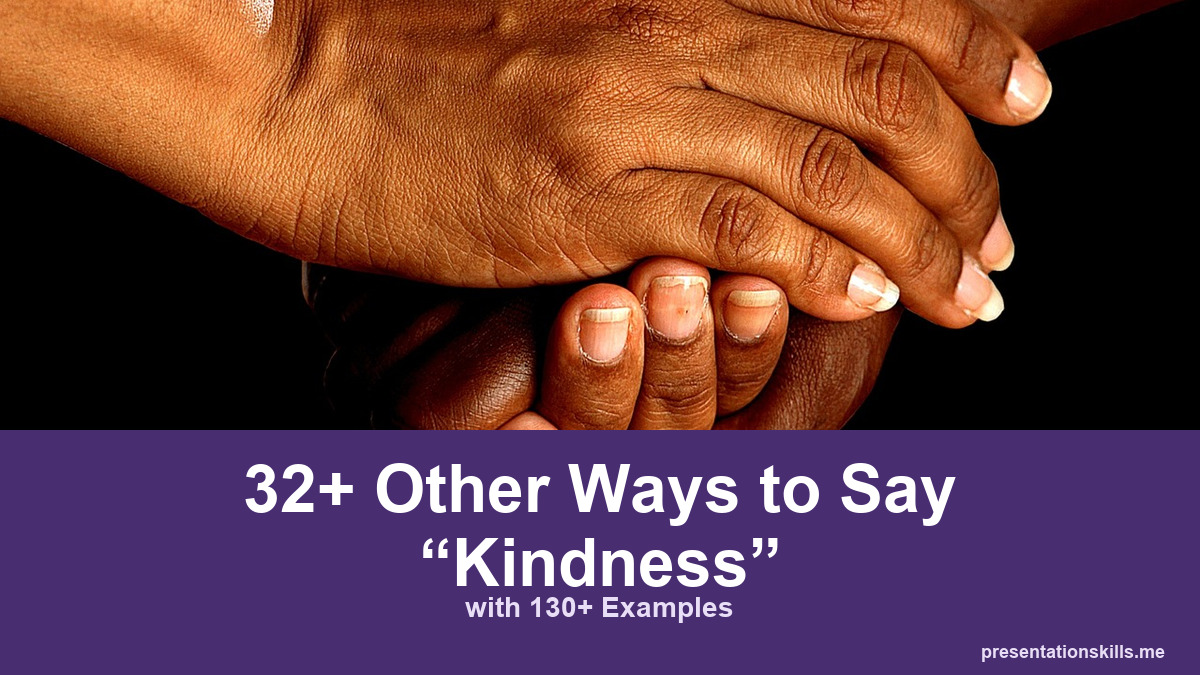
Compassion, consideration, generosity, warmth, and helpfulness are useful alternatives to kindness. Compassion focuses on suffering, consideration on other people’s needs, and generosity on giving. For example: Thank you for your consideration in arranging a quieter room.
Kindness can describe a caring attitude or a helpful act. Many related words describe only one part of that attitude. Courtesy, mercy, and empathy are useful choices, but each adds a meaning that kindness alone does not require.
These 32 alternatives include at least four example sentences each, giving you 132 examples for choosing the right meaning, tone, and construction. Some are direct replacements; others express a particular sense or need a sentence rewrite.
Compassion means concern for someone who is suffering, often with a wish to help.
Alternatives for giving and helping
Generosity
Generosity means willingness to give resources, time, or help.
Alternatives for manner and everyday consideration
Warmth
Warmth describes friendliness and affection in a person's manner.
Further ways to describe care, generosity, and welcome
Care
Care means attention to someone's well-being or the effort taken to treat something properly.
Alternatives for care and understanding
Consideration
Consideration means taking other people's needs or feelings into account.
Alternatives for giving and helping
Benevolence
Benevolence means goodwill and a desire to do good for others.
Alternatives for care and understanding
1. Compassion
Compassion means concern for someone who is suffering, often with a wish to help. It is a precise alternative when kindness responds to distress. It works in personal and professional discussion of hardship; identify the response where possible, because compassion describes concern rather than guaranteeing that help followed. The hardship gives the word its focus, rather than kindness in every setting.
Compassion fits when you mean care in response to suffering.
She showed compassion towards the exhausted traveller.
The letter asked managers to respond with compassion.
His compassion was clear when he stayed to listen.
The tutor showed compassion when the learner explained the difficult week.
The host showed compassion when a visitor became upset during the discussion.
2. Consideration
Consideration means taking other people’s needs or feelings into account. It suits practical kindness in scheduling, communication, and shared spaces. Use consideration for someone’s needs or thank someone for their consideration; it fits respectful professional messages without the warmth of a personal tribute. It acknowledges awareness of another person’s circumstances rather than simply a polite tone.
Thank you for your consideration in moving the meeting.
The hosts showed consideration for guests who needed step-free access.
He spoke with consideration for the family's privacy.
We appreciated their consideration in providing printed copies for the session.
The advance notice showed consideration for people arranging their journey to the venue.
3. Thoughtfulness
Thoughtfulness describes care shown by anticipating what someone needs or would appreciate. It is useful for a kindness that involves attention to detail. This noun often praises a small planned gesture; in a thank-you note, specify what was noticed rather than relying on an abstract compliment alone. The anticipation distinguishes thoughtfulness from help offered only after a specific request.
Thoughtfulness fits when you mean anticipating another's needs.
Her thoughtfulness made the first day less daunting.
The handwritten directions were an example of his thoughtfulness.
We appreciated the thoughtfulness behind the welcome pack.
His thoughtfulness showed in the clear directions he sent before the visit.
Her thoughtfulness was clear in the spare reading glasses beside the large-print programme.
4. Empathy
Empathy means understanding or sharing another person’s feelings. It can support kindness, but understanding alone is not necessarily a kind action. Use empathy for someone or with someone’s experience according to the construction; avoid treating understanding as proof that the person agreed or offered assistance. Understanding another person’s feelings can support kindness without itself completing a helpful action.
Her empathy helped her listen without interrupting.
The exercise encouraged empathy for people new to the process.
He answered with empathy after hearing the full story.
The manager showed empathy when she listened to the account without rushing.
The interviewer used empathy to acknowledge the experience without assuming how the speaker felt.
5. Sympathy
Sympathy means concern for someone’s difficulty or sadness. It suits an expression of kindness in response to misfortune, rather than every friendly act. Use sympathy for or with depending on the meaning; sympathy with a view can mean agreement, so explain the hardship where concern is intended. The concern can be expressed without pretending to have lived the same experience.
Sympathy fits when you mean concern after misfortune.
The team expressed sympathy after the family's loss.
She listened with sympathy to his account of the delay.
His note conveyed sympathy without asking intrusive questions.
The neighbour expressed sympathy after hearing about the cancelled visit.
6. Tenderness
Tenderness describes gentle affection or sensitive care. It has a personal tone and usually fits close relationships better than neutral workplace feedback. It suits affectionate descriptions in personal messages and stories; a workplace note may need consideration or care unless the relationship supports that intimacy. Its affectionate quality distinguishes it from the distance of ordinary professional courtesy.
He spoke about his grandmother with tenderness.
The scene shows the tenderness between the two sisters.
She cared for the injured bird with tenderness.
The narrator describes the family's tenderness towards the youngest child.
7. Humanity
Humanity can mean humane concern for others. In this sense it is a broader moral description than an individual kindness, and context must distinguish it from humankind. This more formal choice works in accounts of treatment and moral judgement; describe the humane act if readers could confuse humanity with all human beings. The humane treatment matters more than the social charm of the person involved.
Humanity fits when you mean humane concern.
The volunteers treated the visitors with humanity.
The account describes a moment of humanity during the conflict.
She asked the committee to show humanity in its decision.
The interpreter's humanity was evident in the time she gave each visitor.
Alternatives for giving and helping
8. Generosity
Generosity means willingness to give resources, time, or help. It is the best replacement when the kindness consists of giving more than expected. Use generosity in doing something or generosity towards others; it can describe sharing resources without implying the giver expected repayment or recognition. Giving time or attention can show generosity without involving a financial donation.
We appreciated his generosity in lending the room.
Her generosity allowed two students to join the course.
The appeal recognised the generosity of local donors.
Her generosity in lending the equipment made the workshop possible.
9. Benevolence
Benevolence means goodwill and a desire to do good for others. It is formal and often describes a general attitude rather than one small act. It sounds formal in modern everyday writing; choose goodwill or kindness for a short message unless the broader charitable attitude is the point. It describes an inclination to help rather than the precise help eventually delivered.
Benevolence fits when you mean goodwill towards others.
The founder's benevolence shaped the charity's early work.
The letter appealed to the committee's benevolence.
His benevolence extended beyond the people he knew personally.
The account presents benevolence as the motive for opening the school.
10. Helpfulness
Helpfulness describes a willingness or ability to assist. It fits practical kindness, especially when someone gives clear advice or useful support. It fits feedback about assistance and service; describe what the person helped with, since friendliness alone does not show that useful help was offered. The practical assistance may be quiet and matter-of-fact rather than visibly affectionate.
Her helpfulness made the application easier to complete.
The visitor praised the staff's helpfulness.
His helpfulness was apparent when he offered to carry the equipment.
We thanked the assistant for her helpfulness in locating the missing forms.
11. Charity
Charity can mean giving aid to people in need or judging others generously. It has specific associations with charitable giving, so it is not a replacement for every kindness. Use it carefully when the context could imply a registered organisation; generosity or support may be clearer when you simply mean one neighbour’s help. The charitable judgement gives someone the benefit of a sympathetic reading of their circumstances.
Charity fits when you mean giving aid or judging generously.
They relied on the charity of neighbours after the fire.
The speech encouraged charity towards people who make mistakes.
Her charity towards the newcomers helped them feel welcome.
The story shows charity towards a stranger who has nowhere to stay.
12. Goodwill
Goodwill means friendly or benevolent feeling towards others. It suits a positive attitude or cooperative relationship, without necessarily naming a specific act. It is common in accounts of cooperation and relationships; goodwill can exist before an action, so do not use it to imply help that never occurred. Goodwill can support cooperation even when the parties continue to disagree on details.
The gesture created goodwill between the two groups.
She thanked the volunteers for their goodwill.
A little goodwill helped resolve the scheduling disagreement.
The invitation was a gesture of goodwill after the disagreement.
Alternatives for manner and everyday consideration
13. Warmth
Warmth describes friendliness and affection in a person’s manner. It is useful when kindness is communicated through tone or welcome. Use warmth in a welcome, voice, or response where friendliness is felt; physical warmth has a separate meaning that the context should rule out. A warm response conveys friendliness without necessarily promising further help or agreement.
Warmth fits when you mean friendly, affectionate manner.
The receptionist greeted us with warmth.
Her warmth put the new speaker at ease.
The invitation conveyed warmth without sounding overly familiar.
Her warmth helped the first-time visitor feel comfortable asking for directions.
14. Friendliness
Friendliness describes an approachable, pleasant attitude. A person can be friendly without providing practical help, so it captures only part of kindness. It works in general feedback about approachable behaviour; helpfulness is more exact if the person supplied advice or solved a practical problem. A friendly greeting can be appreciated even before any practical assistance is needed.
The tutor's friendliness encouraged the class to ask questions.
We noticed the friendliness of the staff at the entrance.
His friendliness made the long wait easier.
The steward's friendliness made the entrance feel welcoming.
15. Courtesy
Courtesy means polite, considerate behaviour. It suits small social kindnesses, but can describe formal politeness without warmth. It fits ordinary professional communication and polite gestures; it can be sincere without being intimate, which makes it useful in formal thanks. The polite action matters here; a courteous exchange need not imply close friendship or a continuing personal relationship.
Courtesy fits when you mean polite, considerate behaviour.
Thank you for the courtesy of replying so promptly.
The speaker treated every question with courtesy.
She showed courtesy by checking before moving his papers.
The organisers showed courtesy by notifying everyone of the change promptly.
16. Graciousness
Graciousness describes courteous kindness, often when receiving help, praise, or an unwelcome outcome. It is a more formal judgement of manner. It suits praise of someone responding considerately under pressure; a simple thank-you can use graciousness when politeness included visible patience or generosity. It combines considerate manners with a generous response to the particular situation.
She accepted the correction with graciousness.
The host's graciousness made everyone feel welcome.
He responded to the disappointing result with graciousness.
Her graciousness towards the nervous speaker eased the awkward moment.
17. Mercy
Mercy means compassionate restraint towards someone who could be punished or harmed. It fits kindness from a position of power, not ordinary friendliness. Use show mercy or ask for mercy when someone can impose a consequence; it adds a power relationship that ordinary kindness need not contain. The restraint belongs to someone who could otherwise impose a harsher consequence.
Mercy fits when you mean compassionate restraint.
The story ends with the ruler showing mercy.
The committee showed mercy by allowing an extra day for the late application.
He asked for mercy rather than another argument about blame.
The teacher showed mercy by allowing another attempt after the misunderstanding.
18. Patience
Patience means tolerating delay, difficulty, or repetition without becoming angry. It can describe a kind response, but it is also a separate quality. It fits learning, waiting, and repeated explanation; gratitude for patience should name the delay or difficulty rather than assuming the reader remembers it. The tolerance is part of the response to difficulty, delay, or repeated explanation.
Thank you for your patience while I learned the system.
Her patience helped the children complete the task.
He answered the repeated question with patience.
Thank you for your patience while we found the correct room.
Further ways to describe care, generosity, and welcome
19. Care
Care means attention to someone’s well-being or the effort taken to treat something properly. It is a broad alternative to kindness when looking after a person is the point. Use care for someone or treat someone with care. It can describe a responsibility as well as a feeling, so mention the helpful action if the context needs more than a warm intention.
The volunteers treated each visitor with care.
She showed care by checking that the instructions were understood.
The tutor's care helped the nervous learner continue.
The letter thanked the staff for their care during the visit.
20. Concern
Concern can mean an attentive interest in someone’s well-being. It is useful when kindness takes the form of noticing a difficulty or expressing care. Use concern for someone to distinguish it from anxiety about a problem. Concern alone does not show that practical help followed, so describe the action separately when you want to praise what the person actually did.
Her concern for the new speaker was apparent.
The neighbour expressed concern for the family after the move.
He showed concern by asking whether the room was comfortable.
The tutor answered with concern for the learner's confidence.
21. Gentleness
Gentleness describes a mild, considerate manner that avoids harshness. It can replace kindness when the tone or handling of a situation is central. Use it for speech, actions, or treatment in personal description. A gentle approach can still include a clear boundary or correction, so the word does not mean someone must avoid disagreement or accept every request.
She explained the mistake with gentleness.
The nurse in the story is remembered for her gentleness.
He handled the nervous bird with gentleness.
The tutor's gentleness made the correction easier to hear.
22. Kindheartedness
Kindheartedness names a caring, generous disposition towards others. It is a close alternative when kindness refers to someone’s character rather than a single favour. Use it in personal appreciation or descriptive writing. It can sound more affectionate than consideration in a workplace message, and the strongest tribute will still identify the acts that show this quality rather than assert it alone.
Her kindheartedness was evident in the welcome she offered.
The story praises the innkeeper's kindheartedness.
His kindheartedness led him to stay and help clear the room.
The volunteers remembered her kindheartedness towards newcomers.
23. Warmheartedness
Warmheartedness means affectionate, sympathetic friendliness. It suits a description of someone’s kind manner or character, especially in personal tributes. Use it when warmth is more important than formal politeness. It is a longer, more emotional word than courtesy or helpfulness, so an ordinary service review may be clearer if it names the friendly or helpful act directly.
His warmheartedness made the visitors feel at home.
The account describes her warmheartedness towards the children.
We appreciated the host's warmheartedness throughout the weekend.
The letter recalls the teacher's warmheartedness as well as her patience.
24. Understanding
Understanding can mean sympathetic recognition of another person’s circumstances or feelings. It replaces kindness when someone responds fairly to a difficulty rather than simply following a rule. Use show understanding or thank someone for their understanding. The word can also mean comprehension, so make the personal context clear; understanding a problem does not automatically imply agreeing to a request.
Thank you for your understanding about the delayed reply.
She showed understanding when the volunteer explained the mistake.
The tutor responded with understanding rather than irritation.
His understanding helped the group discuss the awkward situation.
25. Sensitivity
Sensitivity describes awareness of how others may feel or be affected. It overlaps with kindness when careful treatment of a delicate matter is the point. Use sensitivity to someone’s needs or handle a subject with sensitivity. It can also have technical meanings, so context should rule those out. Awareness does not itself guarantee a helpful act, which may need separate description.
She discussed the loss with sensitivity.
The organiser showed sensitivity to guests who needed a quieter space.
His sensitivity helped him avoid an intrusive question.
The report was written with sensitivity to the families involved.
26. Attentiveness
Attentiveness describes careful attention to someone or to their needs. It is a useful alternative when kindness is shown through listening, noticing, or responding promptly. Use it in feedback about care or service. Attentiveness can also describe concentration on a task, so name the person or need being attended to if you want the caring sense rather than simple alertness.
The receptionist's attentiveness made the visit easier.
We appreciated the tutor's attentiveness to questions from the back row.
Her attentiveness helped her notice the missing handout.
The host showed attentiveness by checking whether everyone could hear.
27. Hospitality
Hospitality means friendly and generous treatment of guests. It replaces kindness when welcoming someone, sharing food, or providing a place to stay is the relevant action. Use thank you for your hospitality in personal or professional visits. It is narrower than kindness, so it will not fit every helpful reply or patient explanation that occurs outside a hosting relationship.
Thank you for your hospitality during our visit.
The family offered hospitality to the stranded travellers.
The society's hospitality made the visiting speakers feel welcome.
We remembered the village's hospitality long after the event.
28. Altruism
Altruism describes concern for others expressed through action that is not primarily for personal benefit. It is a more formal alternative to kindness and adds an emphasis on motive. Use it in ethical discussion or a supported character description. Avoid assuming someone’s private motive from a single gesture; generosity or helpfulness can describe the visible act without making that stronger inference.
The essay considers altruism in volunteer work.
The story presents the character's decision as an act of altruism.
The discussion explored whether altruism requires personal sacrifice.
The speaker described altruism as concern extending beyond immediate self-interest.
29. Beneficence
Beneficence means doing good or acting for others’ benefit. It is a formal term used in ethics and institutional discussion, rather than a natural substitute in a casual thank-you. Use it when the action’s beneficial purpose matters. It does not describe friendly tone by itself, so courtesy or warmth may be clearer if the original kindness refers mainly to someone’s manner.
The lecture examined beneficence in professional decision-making.
The essay contrasts beneficence with simple rule-following.
The speaker discussed how beneficence can guide practical assistance.
The account presents the foundation's work as an example of beneficence.
30. Good nature
Good nature describes a pleasant, kindly, and tolerant disposition. It is an informal alternative when kindness refers to someone’s usual temperament. Use someone’s good nature or act with good nature in character descriptions and personal appreciation. It suggests an easy willingness to respond kindly, but should not imply that the person has no boundaries or must always accept extra requests.
Her good nature helped the group recover from the mix-up.
The guide handled the repeated question with good nature.
His good nature was apparent during the long wait.
The narrator describes a neighbour known for her good nature.
31. Leniency
Leniency means treating a mistake, offence, or difficulty less harshly than might be expected. It is a narrower alternative when kindness involves relaxing a consequence or allowing another chance. Use show leniency or ask for leniency in formal and everyday writing. It implies discretion over treatment, so it does not fit an ordinary friendly greeting or a gift without that relationship.
The organiser showed leniency after the volunteer misunderstood the deadline.
The panel allowed some leniency when the travel delay was explained.
She asked for leniency after missing the first registration period.
The tutor balanced leniency with a clear explanation of the rule.
32. Benevolent gesture
Benevolent gesture describes an act intended to help or express goodwill towards another person. It is a formal phrase-level alternative when kindness means a particular helpful act rather than a general disposition. Use it in an account of what someone did, and identify the gesture. The benevolent intention should be supported by context rather than invented from a person’s outward manner alone.
The story presents the offer of shelter as a benevolent gesture.
Her benevolent gesture gave the stranded visitor a place to wait.
The account describes the free lessons as a benevolent gesture towards newcomers.
The narrator interprets the unexpected gift as a benevolent gesture.
What is a professional word for kindness?
Consideration works well when someone has accounted for your needs. Helpfulness suits practical assistance, and courtesy suits polite treatment. Use the word that identifies the act you are thanking them for.
Are empathy and kindness the same?
No. Empathy concerns understanding or sharing feelings; kindness concerns a caring attitude or helpful behaviour. A person may understand another person’s feelings without acting kindly.
What can I say instead of thank you for your kindness?
Thank you for your thoughtfulness suits a considerate gesture. Thank you for your generosity suits giving time, money, or resources. For a specific act, thank you for helping me prepare is usually clearer.
Choosing the right wording
In a thank-you message, name the act as well as the quality. Thank you for your patience while I practised the opening gives the reader a concrete reason for the appreciation. For related communication skills, see emotional intelligence in leadership and understanding communication styles.
Kindness alternatives at a glance
Alternative
Meaning and use
Compassion
Compassion means concern for someone who is suffering, often with a wish to help.
Consideration
Consideration means taking other people's needs or feelings into account.
Thoughtfulness
Thoughtfulness describes care shown by anticipating what someone needs or would appreciate.
Empathy
Empathy means understanding or sharing another person's feelings.
Sympathy
Sympathy means concern for someone's difficulty or sadness.
Tenderness
Tenderness describes gentle affection or sensitive care.
Humanity
Humanity can mean humane concern for others.
Generosity
Generosity means willingness to give resources, time, or help.
Benevolence
Benevolence means goodwill and a desire to do good for others.
Helpfulness
Helpfulness describes a willingness or ability to assist.
Charity
Charity can mean giving aid to people in need or judging others generously.
Goodwill
Goodwill means friendly or benevolent feeling towards others.
Warmth
Warmth describes friendliness and affection in a person's manner.
Friendliness
Friendliness describes an approachable, pleasant attitude.
Courtesy
Courtesy means polite, considerate behaviour.
Graciousness
Graciousness describes courteous kindness, often when receiving help, praise, or an unwelcome outcome.
Mercy
Mercy means compassionate restraint towards someone who could be punished or harmed.
Patience
Patience means tolerating delay, difficulty, or repetition without becoming angry.
Care
Care means attention to someone's well-being or the effort taken to treat something properly.
Concern
Concern can mean an attentive interest in someone's well-being.
Gentleness
Gentleness describes a mild, considerate manner that avoids harshness.
Kindheartedness
Kindheartedness names a caring, generous disposition towards others.
Warmheartedness
Warmheartedness means affectionate, sympathetic friendliness.
Understanding
Understanding can mean sympathetic recognition of another person's circumstances or feelings.
Sensitivity
Sensitivity describes awareness of how others may feel or be affected.
Attentiveness
Attentiveness describes careful attention to someone or to their needs.
Hospitality
Hospitality means friendly and generous treatment of guests.
Altruism
Altruism describes concern for others expressed through action that is not primarily for personal benefit.
Beneficence
Beneficence means doing good or acting for others' benefit.
Good nature
Good nature describes a pleasant, kindly, and tolerant disposition.
Leniency
Leniency means treating a mistake, offence, or difficulty less harshly than might be expected.
Benevolent gesture
Benevolent gesture describes an act intended to help or express goodwill towards another person.