
Adult debate topics work when the group can define a proposal and weigh its costs. “Should our team keep one meeting-free day each week?” gives participants something concrete to test. Use the prompts below for practice or adapt one to a decision your group needs to make.
Contents
- Work and technology
- Community and everyday life
- Work and leadership
- Technology and personal data
- Cities and public spaces
- Environment and consumption
- Education and lifelong learning
- Health and daily life
- Media and public conversation
- Money and consumer choices
- Relationships and community norms
- Ethics and trade-offs
- Use a three-round format
- Choose a prompt with a real trade-off
Work and technology
- Should teams default to written updates instead of status meetings?
- Is a four-day working week worth a longer workday?
- Should employers pay for time spent learning new tools?
- Should every important decision have a written dissenting view?
- Does convenience justify sharing more personal data?
- Should public services offer a fully offline option?
Community and everyday life
- Should city space prioritize bicycles, buses, or parking?
- Is a local library’s best use books, events, or shared work space?
- Should restaurants display the origin of their main ingredients?
- Are repair incentives more useful than recycling campaigns?
- Should volunteering be part of a professional development plan?
- Is it better to fund one large community project or several small ones?
Work and leadership
- Should every manager still do hands-on work each month?
- Should promotion depend more on mentoring than individual output?
- Should a team publish the reasons behind major decisions?
- Should a meeting require an agenda before it can be booked?
- Should employees choose where to work for each task?
- Should performance reviews include feedback from collaborators?
- Should a company cap the number of projects per team?
- Should leaders announce uncertainty earlier than they usually do?
- Should a team rotate responsibility for unpopular work?
- Should employers reserve paid time for learning outside a current role?
- Should an organization reward people who stop ineffective projects?
- Should new managers receive training before leading a team?
- Should teams document failed experiments as carefully as successes?
- Should employees be allowed to decline meetings without a clear purpose?
- Should a business publish salary ranges for every role?
- Should managers make fewer decisions and set clearer boundaries instead?
- Should a company use customer complaints in product planning meetings?
- Should teams choose their own measures of success?
- Should a resignation prompt a formal process review?
- Should a business keep a record of decisions it later reversed?
Technology and personal data
- Should websites offer a simple version without personalization?
- Should AI-generated customer messages always be labeled?
- Should employers explain when software monitors work activity?
- Should people be able to erase old purchase histories easily?
- Should recommendation feeds allow a chronological default?
- Should public agencies explain automated decisions in plain language?
- Should devices be designed to work without an account?
- Should a company publish how long it keeps customer data?
- Should digital services offer a human appeal for automated refusals?
- Should schools teach adults how to spot synthetic media?
- Should subscription services require a reminder before renewal?
- Should app stores show repair and update support clearly?
- Should a city use sensors to manage traffic if data is anonymized?
- Should people own the data from their fitness devices?
- Should an AI tool be allowed to speak for a company without review?
- Should online platforms show why a post was recommended?
- Should hospitals use chatbots for routine appointment questions?
- Should an employer pay for the tools needed to work from home?
- Should a phone be easier to repair even if it becomes heavier?
- Should public records be searchable by default?
Cities and public spaces
- Should cities replace some parking with seating and trees?
- Should public transport fares be simpler even if less tailored?
- Should local councils prioritize shade over decorative planting?
- Should town centers offer more public toilets?
- Should libraries stay open later instead of opening more branches?
- Should a city close one street to cars on weekends?
- Should public benches be designed for longer stays?
- Should new housing include shared work areas?
- Should neighborhoods set aside space for community kitchens?
- Should public art budgets require a local vote?
- Should cities use empty shops for temporary community projects?
- Should schools share sports facilities with residents after hours?
- Should planners favor smaller parks close to homes over one large park?
- Should bus stops display real-time information in multiple formats?
- Should local government test changes before making them permanent?
- Should a city restrict short-term rentals in residential blocks?
- Should public space design be reviewed by disabled residents?
- Should a town fund more street lighting or more night buses?
- Should new roads include protected cycling space by default?
- Should a city maintain older buildings even when replacements are cheaper?
Environment and consumption
- Should shops offer repair services alongside new products?
- Should product labels include expected repairability?
- Should restaurants offer smaller default portions to reduce waste?
- Should local governments collect food waste separately?
- Should companies report the life span of their products?
- Should clothing brands offer free mending for a year?
- Should public events ban disposable decorations?
- Should air travel loyalty schemes be redesigned around emissions?
- Should supermarkets sell imperfect produce at the same prominence?
- Should new buildings include rainwater collection?
- Should households pay for waste by volume?
- Should cities plant trees even where parking spaces are lost?
- Should businesses publish the environmental cost of returns?
- Should packaging rules favor reuse over recyclability?
- Should a community invest in shared tools rather than individual ownership?
- Should employers count commuting in sustainability plans?
- Should schools teach practical repair skills to adults?
- Should municipal gardens prioritize native plants?
- Should food delivery apps show packaging choices before checkout?
- Should a town measure success by the amount of waste avoided?
Education and lifelong learning
- Should adults receive paid time for retraining mid-career?
- Should public libraries offer more practical classes than events?
- Should universities publish the skills graduates actually use?
- Should professional certificates expire unless skills are refreshed?
- Should employers accept demonstrated work in place of degrees?
- Should every adult learn basic financial record keeping?
- Should schools teach negotiation as a life skill?
- Should universities let students design part of their curriculum?
- Should public courses be free for people changing careers?
- Should teachers be evaluated partly by long-term learning?
- Should apprenticeships be offered in more office professions?
- Should adults study a subject with no career benefit?
- Should a course reward revision as much as first-attempt performance?
- Should public education include media-literacy refreshers for adults?
- Should employers fund training that might help staff leave?
- Should short courses be assessed by projects rather than tests?
- Should universities teach students how to use AI responsibly?
- Should a community college prioritize local industry needs?
- Should learning platforms show what evidence supports their lessons?
- Should every workplace pair new staff with a mentor?
Health and daily life
- Should workplaces protect a daily period without meetings?
- Should public spaces include more quiet rooms?
- Should cities build walking routes before new sports facilities?
- Should employers offer flexible start times by default?
- Should people schedule leisure with the same care as work?
- Should medical appointments offer written summaries by default?
- Should restaurants display allergen information more prominently?
- Should community centers offer intergenerational exercise sessions?
- Should a workplace measure workload rather than hours online?
- Should employers support caregiving with predictable schedules?
- Should public health messages focus on small habits or big risks?
- Should people receive reminders for preventive appointments?
- Should a city fund social clubs as part of wellbeing policy?
- Should exercise advice emphasize enjoyment over targets?
- Should schools teach sleep as a practical health topic?
- Should employers allow a short recovery break after difficult calls?
- Should pharmacies offer more private consultation space?
- Should public campaigns address loneliness directly?
- Should a workplace redesign its calendar before offering wellness perks?
- Should adults be encouraged to take beginners' classes for fun?
Media and public conversation
- Should news outlets publish corrections as prominently as articles?
- Should opinion columns include the strongest opposing evidence?
- Should social platforms delay sharing of unverified breaking news?
- Should public broadcasters host more local debates?
- Should journalists explain what they could not verify?
- Should podcasts publish short written summaries of each episode?
- Should platforms require a source link for factual viral claims?
- Should newspapers let readers see how headlines changed?
- Should comment sections require real names?
- Should public figures correct old posts when facts change?
- Should documentary makers disclose reenactments clearly?
- Should local news receive public funding with editorial safeguards?
- Should schools teach the difference between a source and a screenshot?
- Should social media hide popularity counts by default?
- Should debate moderators enforce evidence rules equally for every guest?
- Should a newspaper publish more explanations than daily updates?
- Should fact-checkers rate uncertainty as well as truthfulness?
- Should platforms let users choose fewer outrage-driven recommendations?
- Should companies be required to archive public advertising claims?
- Should a community newsletter include residents' questions to officials?
Money and consumer choices
- Should banks offer a plain-language fee statement each year?
- Should employers explain total compensation without jargon?
- Should shops show the cost per use of durable goods?
- Should subscriptions be easier to pause than cancel?
- Should local businesses accept cash even when most customers pay digitally?
- Should credit providers test whether customers understand the terms?
- Should schools teach how to compare a service contract?
- Should shops display the cost of repairs beside replacement prices?
- Should companies offer shorter default contract terms?
- Should public funding favor small local suppliers?
- Should people budget for experiences before possessions?
- Should landlords disclose likely utility costs before a lease?
- Should online stores show total delivery and return costs sooner?
- Should loyalty schemes be banned from changing prices between customers?
- Should public transport offer automatic refunds for major delays?
- Should employers publish the cost of unnecessary meetings?
- Should consumers receive longer warranties for repairable products?
- Should charities report outcomes in the same way as spending?
- Should government forms estimate completion time accurately?
- Should banks be required to offer accessible paper statements?
Relationships and community norms
- Should neighbors be expected to know one another?
- Should every community event include a newcomer host?
- Should families set shared rules for phone use at meals?
- Should adults be more willing to ask for help with ordinary tasks?
- Should friendship groups plan activities that do not cost money?
- Should apologies focus more on repair than explanation?
- Should communities organize shared childcare more formally?
- Should people tell friends when a joke has become hurtful?
- Should public celebrations be designed for people who dislike crowds?
- Should local clubs publish clear welcome guides?
- Should families record stories from older relatives?
- Should neighbors share tools even when borrowing risks damage?
- Should hosts always offer guests an easy way to decline?
- Should workplaces make room for friendships across ages?
- Should people discuss expectations before sharing a home?
- Should community groups rotate leadership regularly?
- Should volunteers be paid for travel expenses?
- Should family traditions change when they exclude someone?
- Should neighborhood disputes use mediation before formal complaints?
- Should a community value quiet contributions as much as visible ones?
Ethics and trade-offs
- Should a good outcome excuse a poor process?
- Should people keep a promise when circumstances change substantially?
- Should organizations publish mistakes before they know the full cause?
- Should fairness mean equal treatment or help based on need?
- Should decision makers favor reversible choices under uncertainty?
- Should a charity accept funds from a controversial donor?
- Should someone reveal a harmless secret to prevent future harm?
- Should companies stop a useful product if it creates avoidable waste?
Use a three-round format
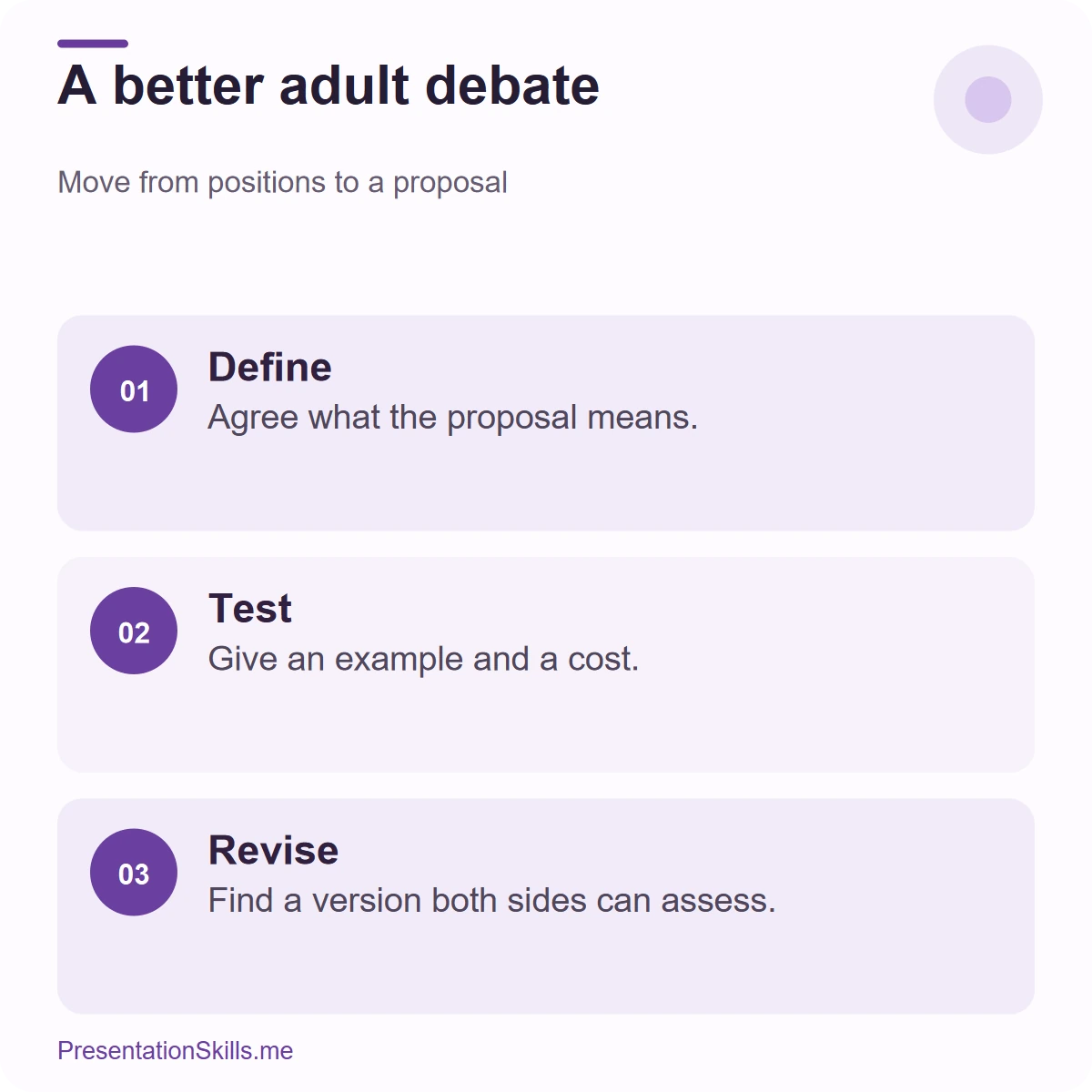
Round 1: Define. Each side states what the proposal means and what it excludes. Round 2: Test. Each side gives its strongest example and names a cost. Round 3: Revise. Both sides suggest a version of the proposal they could accept. Allow equal time and ask participants to attack the idea, never the person.
End with a decision note: “We agree on ___; we still need evidence about ___; our next step is ___.” Even if nobody changes sides, the group leaves with a clearer question. These prompts also work as business discussion topics when a facilitator links them to a real decision.
Choose a prompt with a real trade-off
Before inviting debate, name the decision maker and the constraint. “Should cities add more cycle lanes?” becomes more useful when the group knows which street, how much space is available, and whose needs have to be met. Ask each side to describe the strongest objection to its own position. This discourages easy caricatures and often reveals a better proposal.
If the discussion is for a social group, finish with the most interesting question raised. If it is for work, finish with an owner and a date for gathering the missing evidence.